
Healing Trauma: Soothing the Wounded Inner Child
Shifting from: Anger/Fear, Resentment, and Survival -> Safety, Acceptance, and Freedom
An inconvenient truth we must all grapple with is that our parents didn't have a secret manual on how to raise emotionally healthy children. They were doing the best they could with the tools and resources they had available to them at the time. This perspective doesn't dismiss the pain and suffering they may have inadvertently caused; it supports understanding of what really happened. It's not an excuse; it's an explanation.

It's common practice for psychologists to explore early childhood experiences and family-of- origin as the formation of our nervous system, unconscious, psyche, and patterns of relating in relationships. Using a tech analogy, think of the first seven years of your life as building your "operating system" and the first three as writing the core code. Attachment theory supports that fundamental need for every infant and child to have a safe and secure relationship with a primary caregiver who can consistently meet needs and provide the fundamentals for healthy growth. When the essentials are not provided, physically and emotionally, we see maladaptation to the stressful environment. In fact, chronic emotional invalidation is a greater indicator of long-term mental health issues than isolated traumatic events. To put it plainly, how something is processed and supported is more meaningful than what happened or why.
“Little T” childhood traumas (i.e. essential things that don’t happen that children need) the absence of
unconditional acceptance
belonging
emotional validation
safety (proximity)
capacity of a parent to be emotionally present
careful instruction and guidance
to be seen and understood
environment to explore
free play and creative expression
adequate and timely attention
“Big T” childhood traumas (i.e. harmful things that happen that children don’t need) the presence of
neglect
poverty
parental addiction
parental death
abuse (physical, sexual, emotional)
parental incarceration
domestic violence
parental mental illness
difficult parental divorce
systemic racism
Trauma is a psychological wound. Trauma is not just what happened to you; trauma is what happened internally as a result of what happened externally (ex. I got hit in the head and subsequently developed a concussion). The trauma is your survival response to what happened to you. It's the residual pain that moves through people - in action, in withholding, in words, beliefs, and energy. It gets projected. We carry their wounds, because they carried their parent's unhealed and unprocessed wounds from their childhood; it's a cycle. We inherited trauma through experience, ancestral DNA, cultural expectations, and the generational collective consciousness of the time. All of this gets woven into our unconscious, our psyche, our core belief, drivers, and stored in our nervous system.
The truth is they gave you the best they had AND it wasn't enough. We apply expansive thinking here to increase our capacity to hold two complicated ideas at once. One does not discredit or invalidate the other, both are true and exist concurrently. Just like you're giving your children the best you have.... and it may not be enough, either. Unintentionally and unfortunately.
Be The Adult You Needed as a Child: It's not your fault AND it is your responsibility
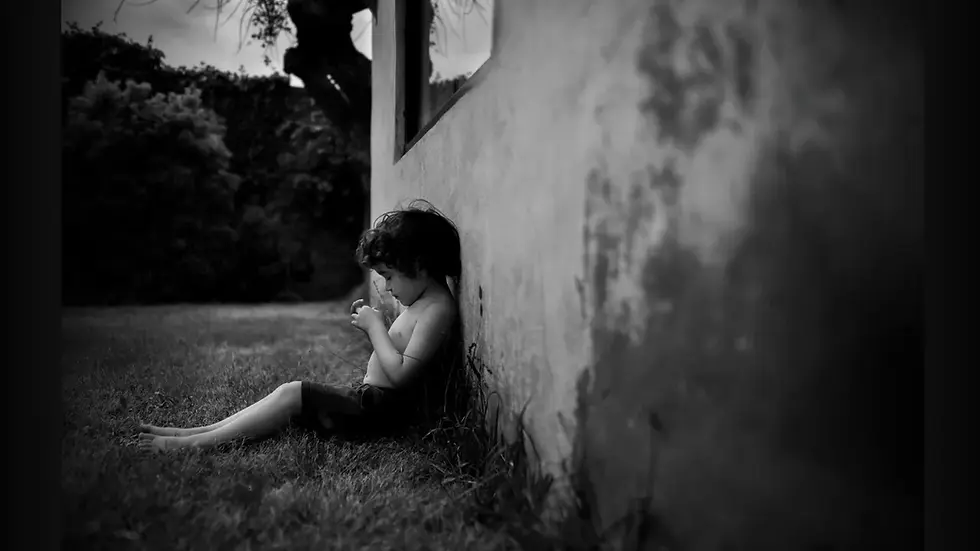
Children need safe, present, connected, calm, consistent adults to care for them. When baby cries, the caregiver picks them up and holds them close, soothing them, calming them, and regulating their nervous system. The adult interprets and provides for their needs. You are now the adult who is responsible to do this important work. If you never had an adult do that for you, that child version of you is suspended in time and liminal space, and may show up in your life dysregulated and triggered, more often than you'd like. Dysregulated, fearful, defensive, explosive, and crying. It isn't your fault your parents couldn't support your needs AND it's your responsibility to meet your needs now. No one else can do that for you. This is sacred work.
Doing inner child work means you meet your own wounded inner child with the compassion you needed then, as the adult you are today. You will uncover and embrace your fears, your limitations, and even some of the parts you exiled. You will learn how to soothe those parts and comfort those parts, showing up as the safe (i.e. consistent, predictable, present, calm, connected) adult, today, with resources and resilience.
You will uncover old childlike beliefs, the ones that use personalization to explain what was happening. These are the stories you told to make sense of the world. When the adult can't meet a child's needs (for a myriad of reasons), the child, with their limited cognitive ability, interprets the adult behavior through the lens of self. They cannot reason nor comprehend the complexity of adult situations. Personalization is the tendency to blame oneself or assume responsibility for events or situations that are not entirely one's fault, even when there's no evidence to support that conclusion. In adults, it's a thinking error where individuals overestimate their impact on external events or others' actions, often leading to feelings of guilt, self-blame, anxiety, and low self-esteem. But in young children, it's the level they're developmentally capable of. Ex. "Bad things happen because I'm bad." or "Mommy is yelling because I'm not a good kid." or "Daddy ignores me because I'm unlovable." These experiences are internalized as punishment, shame, abandonment, and rejection. Additionally, idealizing the caregiver as protector is a biological adaptation and a psychological one (to a child, an unsafe adult is an existential threat, and that is terrorizing. It's easier for the psyche to conceptualize the adult is good/right and the child is bad/wrong).
Without an emotionally mature adult to help the child develop distress tolerance skills, language, awareness, and a robust internal landscape, children are left to develop their own maladaptive coping mechanisms to survive the wounds of childhood. Now as adults, we must confront these core beliefs with understanding, reason, and logic. We alone have the power to change our own minds. We must embrace acceptance and forgiveness to find wholeness and peace within.
Be The Change You Want to See In the World
Becoming the adult you needed as a child encourages individuals to take personal responsibility for creating positive change in their lives and ultimately in relationships and communities. Instead of waiting for others to act, and to validate you, we have the opportunity to embody the qualities and behaviors we wish to see in the world and people around us. Your ability to connect with others on a deeper level requires empathy. Self-awareness and empathy are on a continuum! Your ability to meet someone else, understand them and connect with them (i.e. to be fully seen and fully known) is commensurate to how deeply you have met yourself. From there, you are then able to meet others - their wounded child as the safe adult. That's the palace of understanding, empathy, and forgiveness. You realize most people are not malicious, they're scared. Most people are not trying to intentionally hurt you, they're unconsciously trying to protect themselves.
Parents who scream and yell - that's their wounded inner child who is overwhelmed and throwing a tantrum.
Parents that shut down, stonewall, and avoid conflict - that's a childlike protection to escape.
Every child wants to be soothed and experience the safety of an adult that stays with them, doesn't abandon, reject, or punish.
You are freeing yourself from these learned behaviors and patterns-of-relating.
Healing is about showing up as the best version of yourself in the world. (i.e. you would die for your kids, but would you live for them?)
Healing, feeling, and releasing what no longer serves so you're not bound by old survival patterns. Yes, we may have received trauma, but we also inherited resilience, wisdom, and the capacity to expand awareness. Today we choose to heal from a place of intention, so we can live in the power of now, present to our experiences and choices.


Comments